How to Prepare for Studio Recording (First-Time Guide for Vocalists)

Walking into a recording studio for the first time is rarely what artists expect.
The studio has a way of revealing everything. The strengths in your voice, the weaknesses in your timing, and the small details you don’t notice at home.
When you’re prepared, it becomes one of the most rewarding parts of the process. When you’re not, it can get frustrating very quickly.
The difference usually comes down to a few key things.
The Real Shift Most Artists Aren’t Ready For
Most first-time artists think recording is about capturing a full performance.
In reality, it’s about controlling a performance under a microscope.
At home, you’re hearing your voice in a room, blended with the space around you. In the studio, your vocal is isolated, exposed, and sitting right in front of you.
That’s where things can start to feel uncomfortable. Not because something is wrong, but because you’re hearing yourself clearly for the first time.
And for a lot of singers, that awareness, and that feeling of exposure causes them to pull back or clam up.
A Small Adjustment That Makes a Big Difference
One of the simplest things I tell vocalists is this:
Don’t sing into the microphone. Sing through it.
Or better yet, visualize yourself singing past it, like you’re delivering your vocal to someone across the room.
When a sensitive microphone is right in front of you and you can hear every detail in your headphones, it’s natural to get cautious. A lot of first-time artists become more reserved without realizing it.
That usually leads to a smaller, less confident performance.
When you shift your focus beyond the mic, your delivery opens up. It feels more like a real performance instead of something controlled and held back.
What You Need Dialed In Before You Walk In
There are three areas that make or break a first session.
1. Your Songs Are Fully Locked In
The studio is not the place to figure out lyrics, melodies, or structure. You should know your phrasing, your transitions, and be happy with the key of the song before you arrive. You don’t want to realize that you’ve picked a bad key until you’re there behind the mic, and the clock is running. That preparation allows you to focus on performance instead of decision-making.
Unless you are working in a writing/production session. That is a unique situation where songwriting and musical direction are being hashed out and recorded on the fly. This is more of an experienced singer’s world. They will naturally be more prepared, and know how to separate scratch vocal takes while writing, and final vocal takes for the finished product.
2. You’ve Practiced with Headphones
Headphones change how you hear pitch, tone, and timing. Without that familiarity, your voice can feel disconnected from the track. Spending time rehearsing this way removes that barrier before you ever step into the studio.
3. You’re Mentally Prepared to Perform
This goes beyond just knowing the song.
If you can, memorize your lyrics.
Having them printed or on your phone is important, but relying on them too much changes how you deliver a vocal. When you’re reading while singing, your head is down, your focus is split, and it often comes across more like reciting than performing.
Even memorizing one section at a time can make a noticeable difference. When you know the words, you can stay present, keep your head up, and actually deliver the performance.
What a Real Vocal Session Actually Looks Like
Most vocal sessions are focused on recording small sections at a time, rather than full run-throughs.
Verses, choruses, and key lines are recorded in pieces so you can focus on tone, pitch, and consistency without fatigue setting in.
From there, the vocal is comped by selecting the best parts from multiple takes and combining them into one final performance.
This is standard at every level. It’s how strong records are made.
When the Studio Feels Overwhelming
I’ve worked with artists who are very strong live performers but struggle in the studio.
One session that stands out was with a vocalist who had a lot of experience on stage. Live, she was confident and expressive. But once she got into the studio environment, everything changed.
The idea of her voice being captured and exposed in that level of detail threw her off. She started second-guessing herself, getting frustrated quickly, and pulling away from the performance.
At a certain point, it wasn’t about technique anymore. It was about pressure.
In moments like that, pushing harder doesn’t help. More direction doesn’t help.
The role of the producer shifts. Sometimes the best thing you can do is slow things down, give the artist space, and lower the expectations in that moment.
Instead of trying to push the artist and fix everything, the goal becomes getting something usable while helping them stay grounded. Giving positive feedback, and reminding the artist that anything can be fixed or resung later, will help build their confidence back again.
Not every session is going to feel perfect. And that’s just part of the process.
Common Mistakes That Slow Sessions Down
Over-singing
Trying to force the performance instead of controlling it. Push too hard for too long, and the vocal cords will atrophy.
Under-preparing
Not having enough repetition on the material beforehand.
Getting in your head
Overthinking every take instead of staying present in the moment. When a vocalists isn’t landing the take, I remind them to think about the lyric they’re singing, and let the words guide the emotion of their delivery. Usually this breaks the pattern of overthinking every little detail, and the vocalist returns to the basis. “Just sing”, I tell them.
These are all normal experiences, especially early on. The key is recognizing them quickly and making adjustments.
What to Bring to Your Session
Lyrics (printed or on a device)
Water (room temperature is best)
Reference tracks
A clear, focused mindset
That last one matters more than most people expect.
Final Takeaway
The studio rewards preparation.
When you walk in ready, you can stay focused, perform more naturally, and leave with something you’re proud of.
When you don’t, the session often becomes more of a learning experience.
There’s value in both, but preparation moves you forward faster.
About the Author
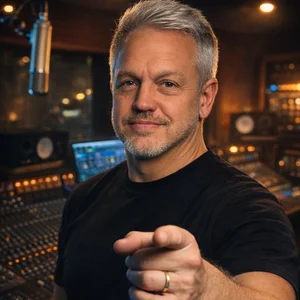
Darren Rust is a producer and recording, mixing, and mastering engineer based in Lakeville, MN. He is the owner of Skyland Studios, working with independent artists locally in the Twin Cities and remotely.
With over 35 years of experience, Darren focuses on helping artists achieve clear, balanced, release-ready mixes, with a strong emphasis on vocal clarity and performance.
If you’re working on a project and want a second set of experienced ears, you can book a call here:
https://www.skylandstudio.com/book-mixing-mastering-skyland