
Why Your Mix Sounds Muddy (And How to Fix It)
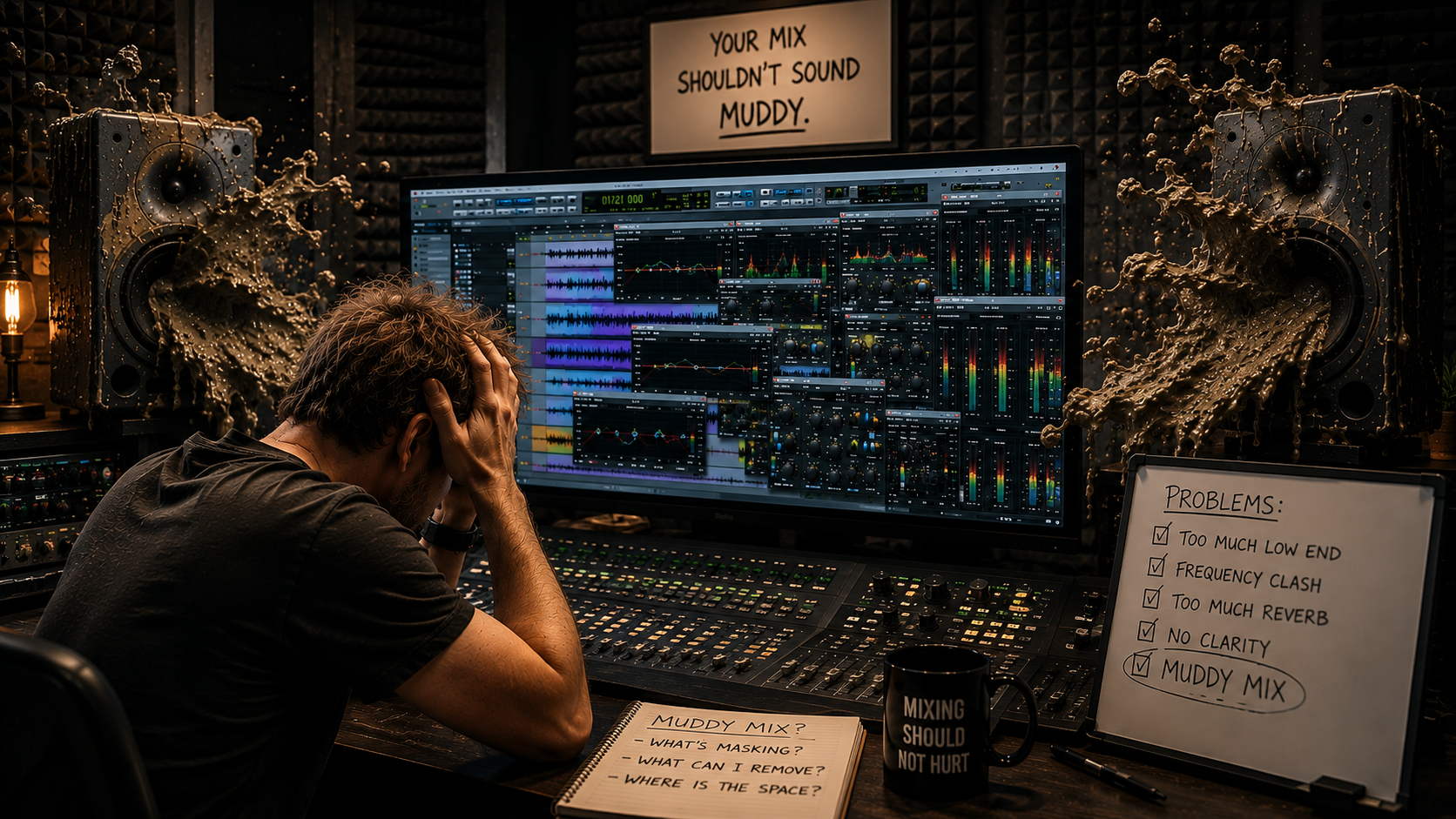
A muddy mix is one of the most common issues engineers run into, especially when working from a home setup. Everything feels crowded, unclear, and lacking definition. The good news is that this is usually fixable with a few focused adjustments.
Let’s break down what’s actually causing it and how to clean it up.
1. Too Much Low-End Buildup
Low frequencies stack up fast. If your kick, bass, guitars, keys, and even vocals all carry unnecessary low-end, the mix loses clarity. And if you mix primarily in small speakers, you may not even be hearing it.
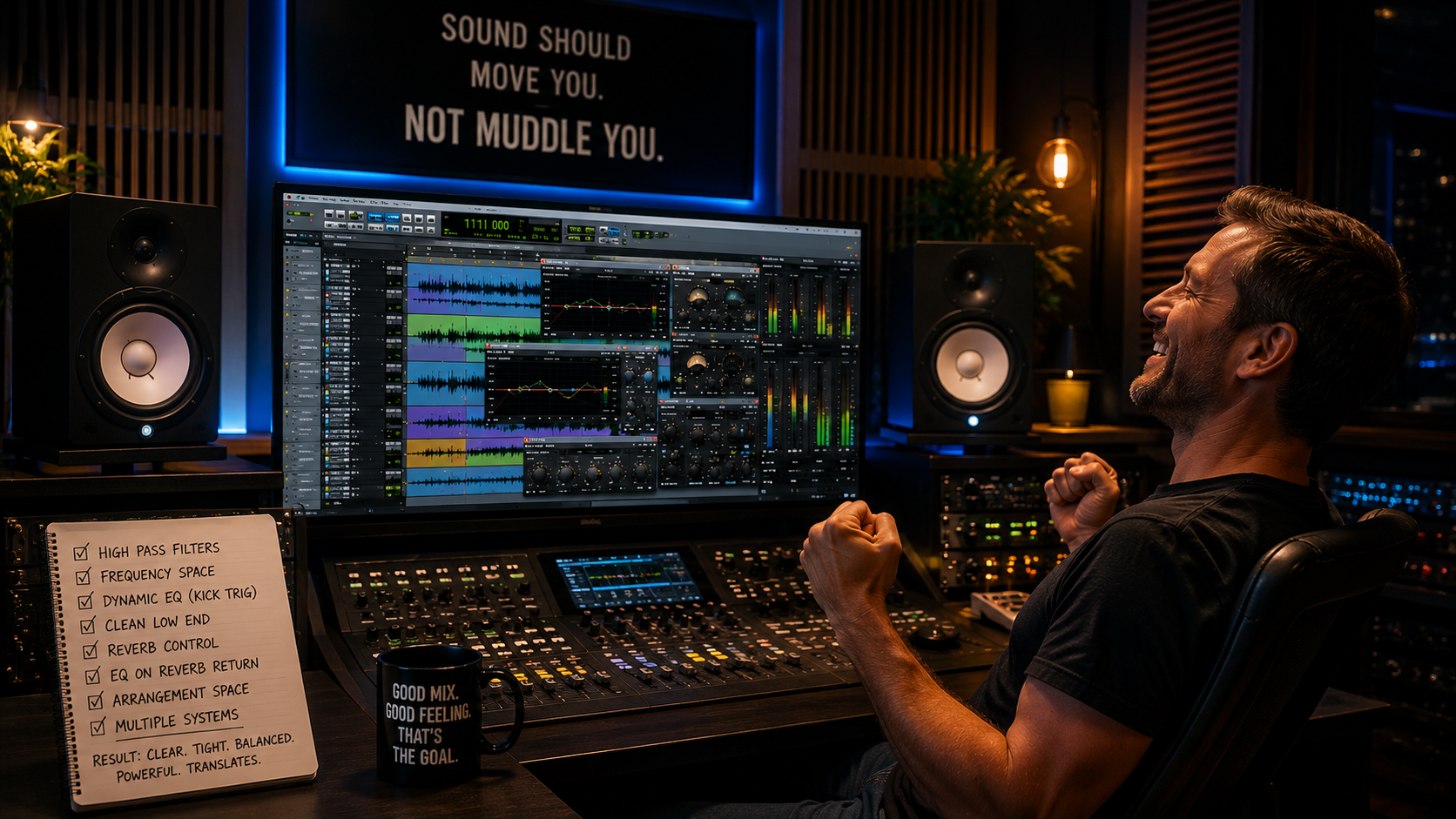
Start by using high-pass filters on non-bass elements. You don’t need extreme cuts, just enough to remove rumble and space out the low end so your kick and bass can do their job. Just a little bit of band pass filtering can do wonders, all by themselves. Easiest first steps.
2. Overlapping Frequencies
When multiple instruments live in the same frequency range, they compete instead of complementing each other.
This is where EQ becomes a tool for separation, not just tone shaping. Instead of boosting everything, try cutting frequencies in one track to make room for another. Small, intentional moves go a long way. Avoid EQ’ing in solo mode. A solo’ed instrument or vocal may sound good by itself, but may not work in the mix.
Kick and Bass usually are to blame for low-end build up. One of the easiest ways to make room for each other is to let the kick live in the 80-100Hz range, and then cut those frequencies out of the bass, to make room for the kick.
Another great trick is to use a dynamic EQ on the Bass, set at around 90Hz, and trigger it from the kick drum. So, whenever the kick hits, it cuts those frequencies out of the bass, just for 100ms or so. Just long enough to make space for the kick in the mix.
Another common problem is excessive build up in the 250-350 Hz range. Bass guitars often carry a lot of 300Hz, and many engineers cut those frequencies by default. Just don’t cut them too much, as those frequencies helps the bass be heard in smaller speakers.
Vocals, especially male vocals, can build up in the 300Hz range as well. A little EQ in that area can help a lot.
3. Too Much Reverb
Reverb can push elements into the background and blur detail if overused. Finding the right blend is key. Reverb on vocals can be the trickiest to get right. Too much reverb, and your vocals feel lost in the background, and not forward enough. Too little, and they sound disconnect from everything else.
If your mix feels washed out, reduce reverb levels or shorten decay times. You can also use EQ on your reverb returns to keep them from adding low-end buildup. You could high pass a Reverb return as high as 300Hz.
4. Lack of Arrangement Space
Sometimes the issue isn’t mixing at all. It’s the arrangement.
If too many parts are playing at once in the same frequency range, the mix will feel cluttered no matter what you do. Muting or simplifying parts can instantly improve clarity. This is often overlooked during the tracking process. Today, there’s a lot of copy and paste in music production. It’s quick, and gets results fast! But things can get stacked up and go unnoticed, as producers aren’t always listening for track build up. Simply pulling out an element can sometimes do the trick!
5. Monitoring Limitations
Like I mentioned above, if you’re listening in small speakers, you may not be hearing the low-frequency build-up. If your room or speakers aren’t giving you an accurate picture, it’s easy to overcompensate and create buildup without realizing it.
Checking your mix on multiple systems like headphones, your car, or a simple Bluetooth speaker can reveal problems quickly. When you make discoveries, go back and make small moves to correct what you’re hearing. Make large moves too quickly, and you’ll be chasing your tail.
Final Thought
A clean mix isn’t about doing more. It’s about making better decisions with what’s already there.
If your mix feels muddy, focus on space, balance, and restraint and use EQ last. This will take you further than any plugin.
About the Author
Darren Rust is a producer and recording, mixing, and mastering engineer based in Lakeville, MN. He is the owner of Skyland Studios, working with independent artists locally in the Twin Cities and remotely.
With over 35 years of experience, Darren focuses on helping artists achieve clear, balanced, release-ready mixes, with a strong emphasis on vocal clarity and performance.
If you’re working on a project and want a second set of experienced ears, you can book a call here:
https://www.skylandstudio.com/book-mixing-mastering-skyland